
From Doodles to AI: A Creative Robotics Lesson for the Modern Classroom
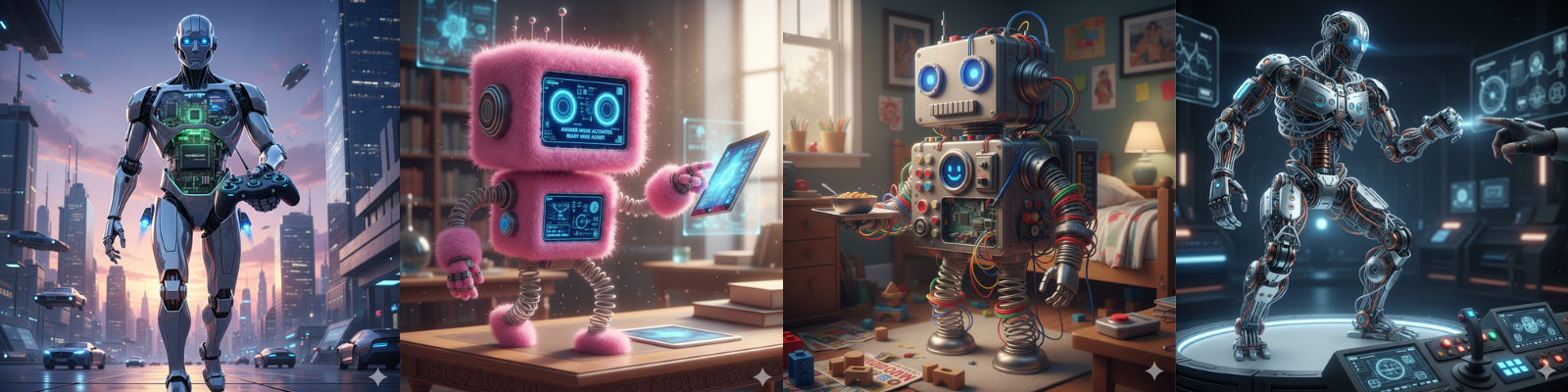
How do you kick off a robotics unit in a way that’s both deeply personal and cutting-edge? I found the answer by starting with a simple question “What is a robot?” and inviting a little help from Artificial Intelligence. The result was one of the most engaging, well-rounded lessons I’ve ever taught, blending writing, art, and critical thinking with a practical introduction to AI. As an added bonus, this was also a relationship-building activity.
On the first day of school, one of the girls came up to me and straight-up told me that she didn’t want to be in my class. She asked if she could go to art class. I told her, “No, but guess what! We are going to make some art today.” I don’t think I won her over, but at least I was able to get her attention. Not everyone will be excited about what you’re teaching, but if you can be inclusive with a diverse teaching style, that’s a win in my book.
Step 1: The Low-Tech, High-Creativity Kickoff
My first lesson in robotics began not with wires and code, but with paper and pencils. I asked my students to do two things:
-
Write down a detailed description of what a robot is.
-
Draw a picture of what they think a robot looks like.
The only rule was that they couldn’t use Google or any outside resources for inspiration. I emphasized that there were no wrong answers. This wasn’t a test; it was an exploration of their own ideas.
This simple prompt served a dual purpose. One, it gave students a low-pressure environment to practice their descriptive writing skills, and two, it allowed them to express their unique creativity. The classroom was quiet with focus as they brought the robots in their imaginations to life on the page.
Step 2: The AI Twist - Bringing Words to Life
The next day, the magic happened. Overnight, I had taken each student’s written description and fed it into Gemini to generate an image. To speed up the process, I created a Gemini “Gem” with the prompt “Create an image of a robot based on the description provided.” This way, I didn’t have to copy and paste or retype the prompt for every student. I compiled all these AI-generated images into a single document.
In front of the class, we went through them one by one. I would read a student’s description aloud, we’d look at their original drawing, and then I’d reveal the image the AI had created from their exact words.
The room buzzed with laughter and surprise. This activity organically turned into a powerful lesson on AI prompting. Students immediately saw that AI is not a mind reader. It can’t see the image you have in your head; it can only work with the instructions you provide. They learned firsthand how literal AI can be and how much the specific words you choose can influence the outcome. A robot described as having “too many wires,” for instance, might be completely entangled in wires in the AI version, a hilarious and memorable lesson in precision.
As a bonus activity, I had the students vote anonymously on their favorite AI-generated robot, and the winning images were used to make the banner image for our Google Classroom. Now, every time they open Classroom, they see their creations. A double bonus, you can take the drawings and print the AI images to decorate your room.
Step 3: Defining Robots in the Real World
With the students now fully engaged and thinking critically about how we describe robots, it was the perfect time to bridge their imaginative ideas with the technical definition.
Here again, AI served as a fantastic teaching assistant. During my lesson planning, I used Gemini to generate a clear outline of the topic. Then I used that outline in Gamma to create a professional-looking slide show.
Using the student drawings and the AI-generated images as a jumping-off point, we launched into a guided discussion. The slides helped us explore the formal definition of a robot and identify the many real-world robots that exist all around us, from the Roomba in our living rooms to the rovers on Mars we see in the news.
Why This Lesson Worked
By using AI, I was able to quickly create a lesson that was far more than just a lecture on robotics. It incorporated AI Literacy, cultural Inclusivity, and personal connection.
Lesson in AI Literacy
Students learned the fundamentals of AI prompting in a tangible, creative way. There is also potential to introduce the idea of AI bias. In all the images that included robots helping humans, the humans were all Caucasians. On the other hand, the generated robots weren’t from a movie or a single cultural source; they were as diverse as the students in my classroom, removing most of the potential biases from the start. Because the descriptions, drawings, and AI images were born from their own ideas, the content was incredibly relatable and took on the character of each student.
Accessing Students and Building Relationships #### Unknowingly, I had created a lesson that helped me to learn a lot about my students and jump-start the relationship-building process. It reminded me of an educator I heard about who spends the entire first week of school on relationship-building activities, believing the long-term payoff far exceeds any initial curriculum delays. After listening to the lecture series on the “7 Laws of the Learner” by Bruce Wilkinson, I, too, have been convinced that it is impossible to teach anyone anything until they know that you care about them and build a relationship.
By the written descriptions, I could easily see the gap in their English literacy, which gave me a clear picture of where they are academically. This often can be a reflection of their home life and or personality. Some of the descriptions told a bit of a story, like how they wanted the robot to clean their room. This might suggest the student doesn’t enjoy cleaning and has parents who expect them to keep their room clean. Others, who said that robots are going to take over the world, gave me a window into their potential fears about AI and the future. Or maybe they just have a very wild and morbid imagination that they have picked up from Hollywood. All things can be conversational starters to get to know the students better.
The images drawn revealed which kids were my artists and who loved to draw. I had one girl who had so much fun drawing robots, she drew an extra one and colored it for me to hang on the wall. One of the boys sketched an almost perfect robot from the Star Wars franchise, which now I know I can use Star Wars to relate with him. Another girl made her robot pink and fuzzy. I never would have thought to make a robot pink and fuzzy, but her drawing was a perfect reflection of both her personality and creativity.
This lesson was a powerful reminder that modern tools aren’t just for efficiency; they can unlock deeper, more personalized learning experiences. It served as a formative assessment, a community builder, and a genuinely fun introduction to a complex topic. How could you use this process to introduce a new idea or topic to your students?
Disclaimer: This blog was co-written with the help of AI.